Early planning works.
When teams answer important questions before they start building, projects usually have fewer surprises, less rework, and lower support costs later.
The problem is not that companies fail to see the value of planning. The problem is paying for it.
Project budgets usually focus on things people can see right away: software, equipment, training, or a finished tool. It is harder to fund better templates, shared methods, clearer information, and reusable knowledge when much of the benefit may appear in future projects.
Companies usually improve in one of three ways:
Projects naturally create useful templates, tools, documents, and experience. The problem is that what one team learns does not always reach the next team in a form that is easy to understand, maintain, and reuse. Over time, experienced people may end up repeatedly explaining decisions and solving problems the company has already solved before.
Every project creates useful things:
- templates;
- spreadsheets;
- checklists;
- software parts;
- training material;
- and practical experience.
Some of these are used again. But the handover is often informal.
A template may be copied without explaining why it was designed that way. A spreadsheet may be difficult for others to understand or maintain. Important lessons may never be written down or shared. Different teams may create their own versions of the same document or tool.
The people involved may have the best intentions. But under project pressure, documentation and handover are often postponed. Over time, experienced people may spend more and more time explaining earlier decisions, answering familiar questions, and helping others understand how everything works.
The company learns, but the learning does not always move safely from one project to the next.
Some teams benefit from earlier work. Others must solve the same problems again.
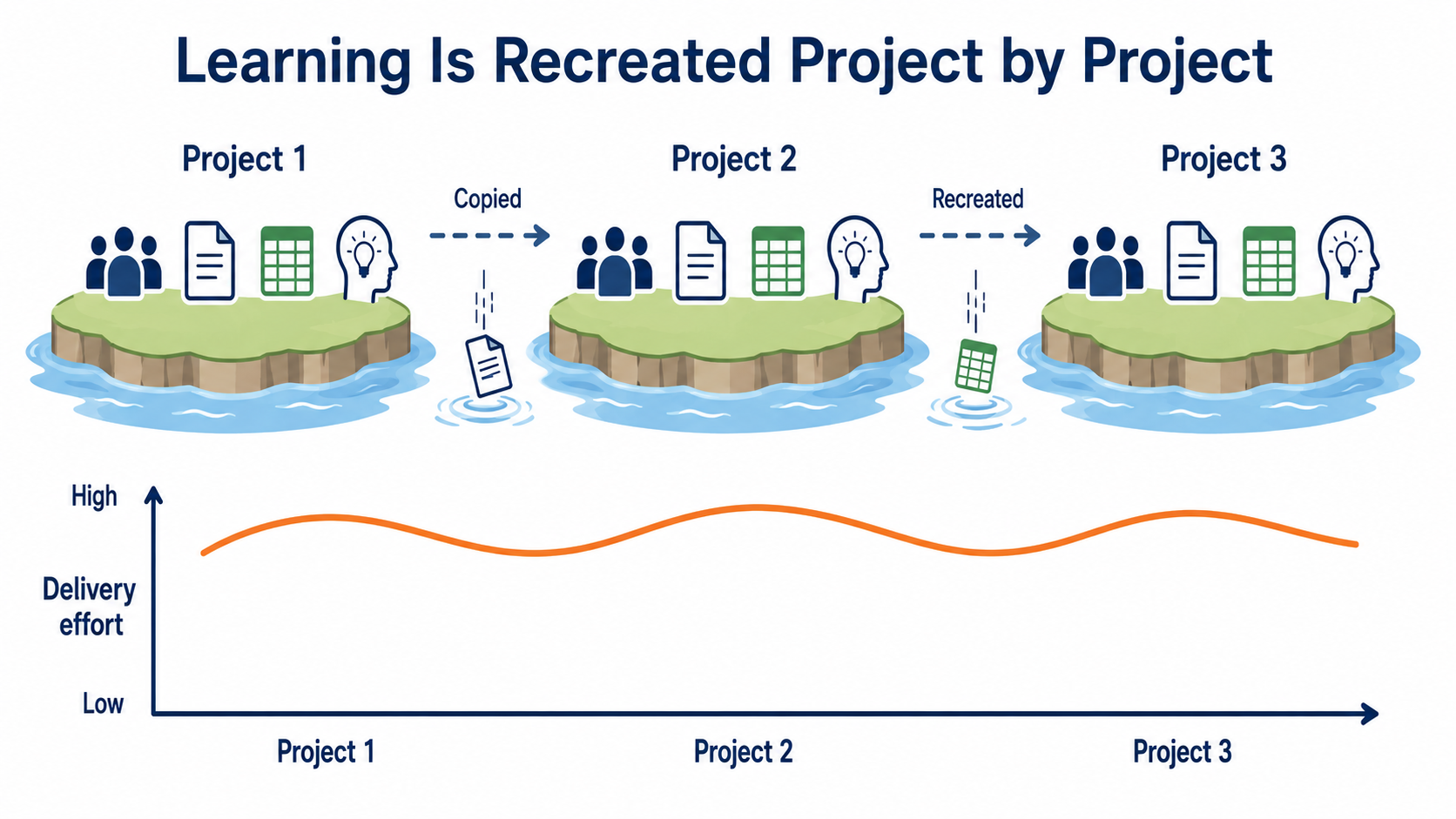
Figure 1 — Projects create useful experience and material, but the next team may not receive it in a form they can easily understand, use, and maintain.
If project-by-project learning is not enough, one option is to create a stronger common foundation upfront. This can improve future projects, but it requires a larger investment before the company knows exactly which improvements will matter most in practice.
Another option is to invest heavily before several projects begin.
The company may create:
- common templates;
- shared work methods;
- training;
- reusable software;
- clear responsibilities;
- and supporting tools.
This can give future projects a much stronger starting point.
But it also requires a large budget before the company knows exactly what will be most useful.
Some parts may become too complex. Some may not be used often. Other needs may only become clear when teams start using the new approach on real projects.
The program may also create a large amount of material that nobody clearly owns after the initial work ends. Without simple rules for maintenance, review, and change, even a well-designed solution can slowly become outdated.
The investment may still pay off, but only after enough projects use it — and only when the resulting capabilities remain understandable, maintained, and available to the wider organization.
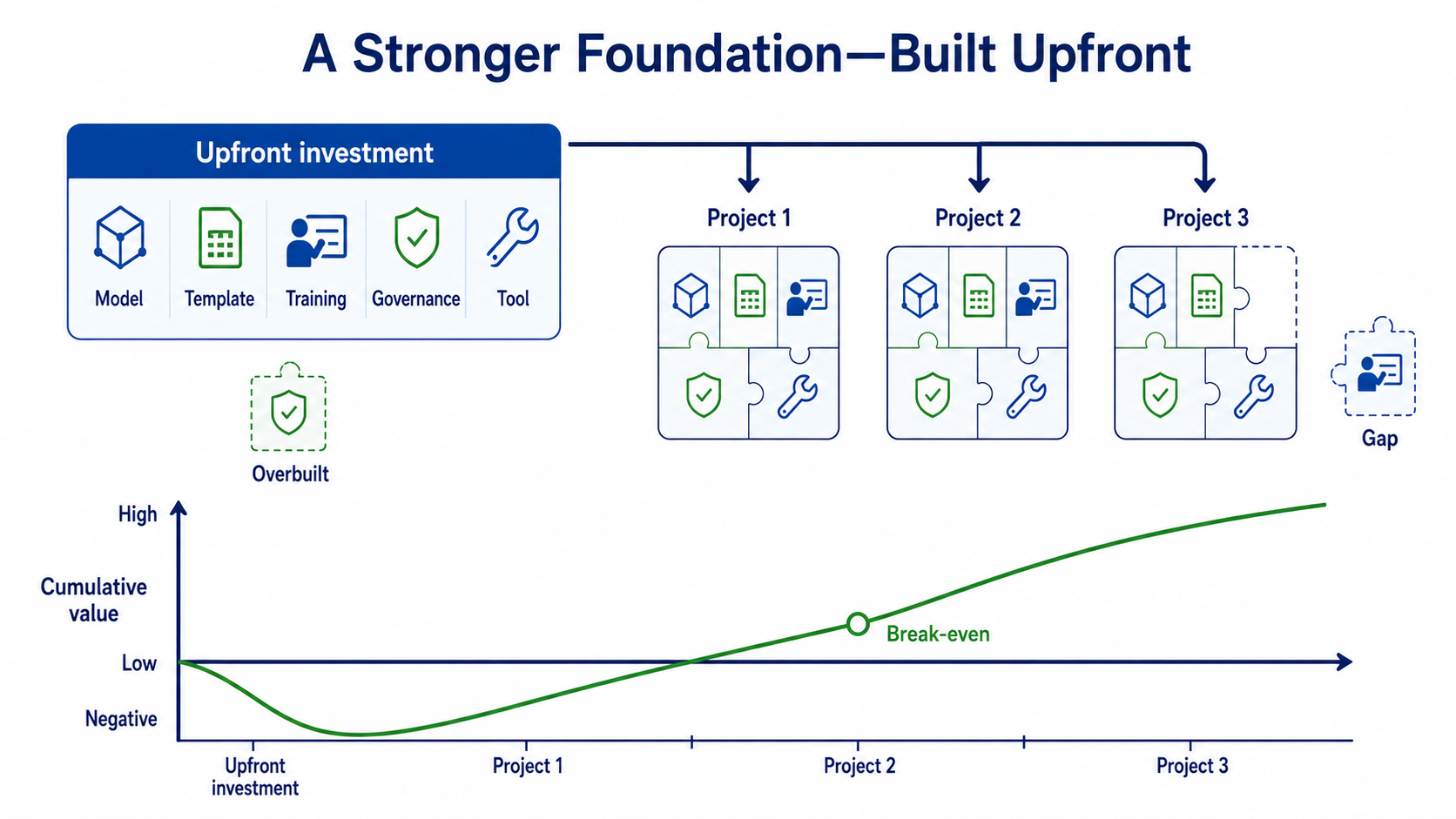
Figure 2 — A large program can improve future projects, but it costs a lot at the beginning and may not match every real need equally well.
T5 takes a middle path. Instead of improving everything at once, it helps identify a useful next step that can create value in the current project while still considering how that result could support a larger direction. The answer may be a tool, but it may just as easily be better use of something the company already has.
T5 offers a more practical middle path.
Instead of trying to improve everything at once, each engagement focuses on one clear need within a current project.
The result might be:
- a better template;
- an improved spreadsheet;
- focused training;
- a clearer work process;
- a shared checklist;
- better use of an existing tool;
- or a small new tool where it is truly needed.
T5 is not simply about building tools. Most companies already have people who can create spreadsheets, scripts, templates, and internal applications.
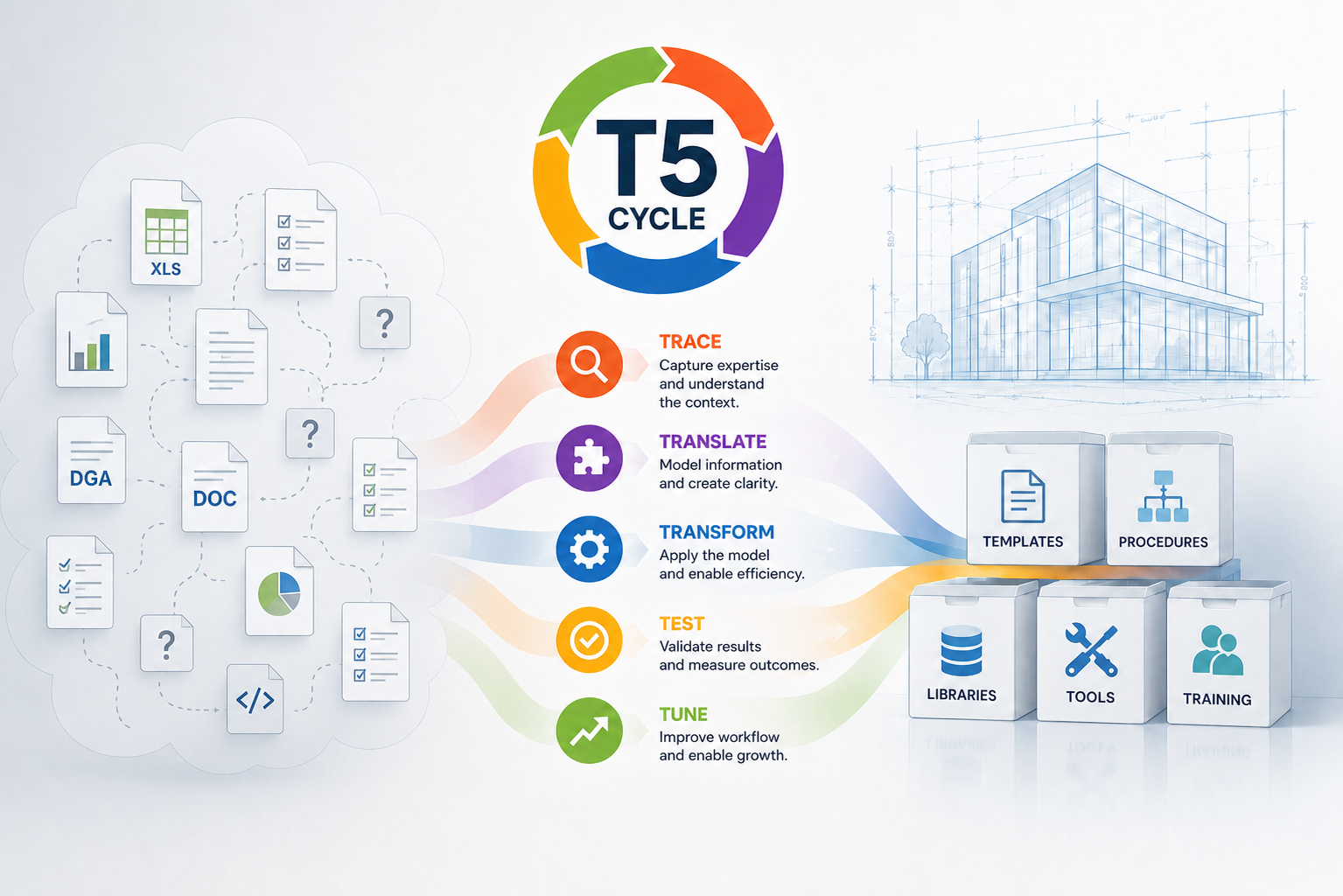
Figure 3 — T5 helps connect existing documents, tools, and knowledge into documented, reusable capabilities that support a larger direction.
The bigger value is helping the company decide what should be improved next, how it fits into the larger picture, and how the result can be shared, maintained, and improved over time.
That means looking at:
- what would help the current project;
- what can be done with a reasonable budget;
- what tools and knowledge already exist;
- what could be reused later;
- and how the improvement fits into a larger direction.
The full long-term plan does not need to be finished before the first step begins.
The company can start with a general direction and improve that direction as each small step is tested in real work.
For example, improving a spreadsheet may show that several teams use the same information in different ways. A training session may reveal that the real problem is an unclear process. A better template may show that nobody clearly owns the information inside it.
Each project teaches us more about what the company really needs.
The bigger picture guides the small steps, and the small steps make the bigger picture clearer.
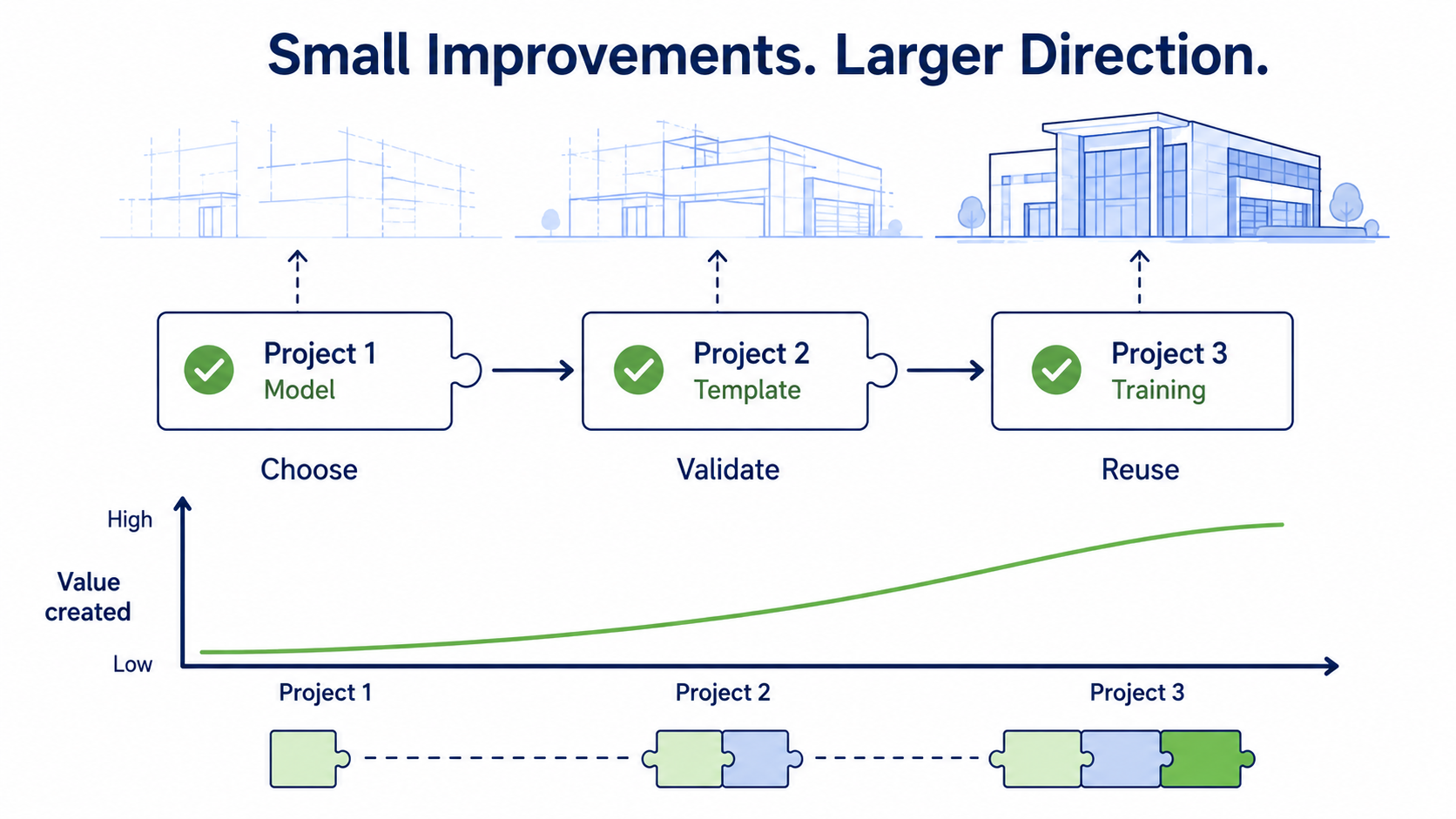
Figure 4 — T5 connects small, tested improvements to a larger direction, so their value can grow from one project to the next.
A useful improvement should not become dependent on the person who created it. T5 therefore considers documentation, ownership, handover, and simple rules for maintaining the result as part of the improvement itself, so the wider team can continue using and improving it.
A useful tool or template is not truly reusable when other people cannot easily understand, use, or maintain it.
Each T5 result should therefore be delivered with enough structure for other people to understand, use, and maintain it.
Depending on the improvement, this may include:
- clear documentation;
- named ownership;
- a defined source of truth;
- simple version and change rules;
- review and approval responsibilities;
- practical handover;
- and training for the people who will use or maintain it.
This is an important difference between T5 and ordinary tool or template development.
The goal is not only to deliver something that works today. The goal is to leave behind something the wider team can understand, use, maintain, and improve over time.
Governance does not need to be heavy or bureaucratic. It only needs to answer practical questions:
Who owns this?
Where is the approved version?
Who may change it?
How will changes be reviewed?
How will the next team learn to use it?
Without those answers, even a useful result can become difficult for others to use or maintain.
Keeping results reusable and independent can be difficult when internal teams are already busy delivering projects and supporting daily work. An outside advisor can focus specifically on the improvement, its handover, and leaving the company with more control rather than another long-term dependency.
Internal teams understand the work better than anyone else. But they may also be under strong pressure to finish the current project, support existing systems, and respond to daily problems.
That can make it difficult to step back, compare improvement options, document what has been learned, and reduce the amount of routine support experienced people need to provide.
An outside advisor can bring a different kind of value.
The engagement can be built around a clear result, a complete handover, and the company’s ability to continue using and improving the result on its own. The advisor does not need to protect an internal role or remain the only person capable of maintaining the result.
This does not mean that outside support is always better than internal work. It means independence can be made an explicit part of the assignment.
A successful engagement should leave the company with more control, not a new long-term dependency.
This approach grew from our own software-development experience. Many useful templates, tools, methods, and reusable software parts were gradually created outside normal project budgets because we knew they would make future work easier. T5 turns that kind of hidden improvement effort into work that can be planned, funded, tested, documented, and reused.
This is also how our own software-development process improved.
Over time, we created better templates, reusable software parts, testing methods, documentation, and small productivity tools.
Much of this work was done during weekends, holidays, and spare time because we knew it would make future projects easier.
The work created value, but the investment was mostly invisible. It was difficult to budget, measure, manage, and repeat in a planned way. Some of what we learned was also difficult for other people to find, understand, and reuse.
T5 turns this kind of gradual improvement into a clear engagement with:
- a useful result for the current project;
- a practical test of whether it works;
- documentation and ownership;
- lessons that can be reused;
- and a connection to a larger direction.
The choice does not have to be between repeating the same work and funding a large transformation. Smaller improvements can create useful results now while gradually building stronger company knowledge, methods, and tools for later projects.
Traditional projects often learn without keeping that knowledge in a reliable way.
Large improvement programs can build a strong foundation, but they need a large commitment at the start.
T5 keeps the bigger picture in view while making each step small enough to fund, use, and evaluate.
The goal is not simply to build something small.
It is to choose the right next improvement, create value now, document it well, and make the result easy for the company to use, maintain, and improve over time.
You do not need to have the solution or a complete improvement plan already defined.
Start by describing the repeated work, what your team already uses, and where the current approach causes delays, inconsistency, or requires experienced people to keep solving the same problems.
A T5 Challenge Review helps us understand the situation, identify a practical next step, and consider how the result could support both the current need and future improvements.